

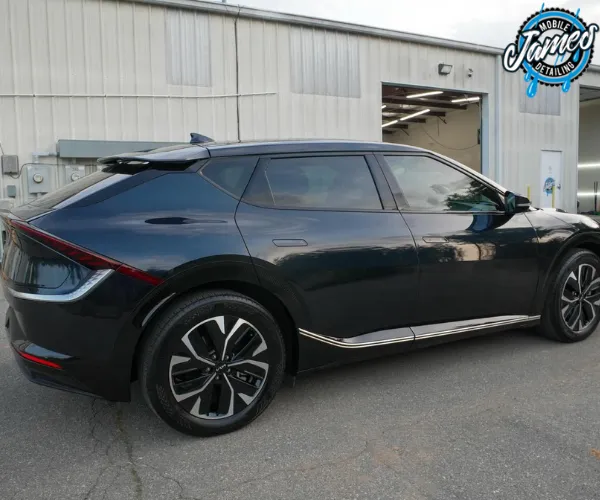
Ceramic coating provides a semi-permanent chemical barrier that prevents road salt and magnesium chloride from bonding to a vehicle’s underbody components. By creating a hydrophobic and corrosion-resistant shield, it stops the oxidation process that leads to structural rust, effectively preserving the mechanical integrity of the chassis in harsh winter environments.
The Hidden Threat of Winter Road Maintenance
Modern road maintenance involves more than just rock salt; many municipalities now use liquid brines designed to stick to surfaces. These brines are highly effective at melting ice, but they are equally effective at creeping into the tightest crevices of a vehicle’s undercarriage. Once these corrosive agents find a home on bare metal or suspension components, they initiate an electrochemical reaction that leads to structural decay. This is why a high-quality application of ceramic coating in Burlington, NC, is a mechanical necessity for those looking to keep their vehicles for the long term.
Vulnerable Underbody Components
The underside of your vehicle houses the most critical mechanical systems, often left exposed to the elements. When driving through Burlington, these components are constantly bombarded by debris and chemicals that compromise safety and performance.
| Component | Risk Level | Impact of Salt Corrosion |
| Frame Rails/Chassis | High | Structural weakness and safety hazards. |
| Brake Lines | Critical | Fluid leaks leading to brake failure. |
| Suspension Coils | Medium | Reduced ride quality and snapped springs. |
| Exhaust System | High | Holes, loud operation, and emissions failure. |
| Fuel Lines | Critical | Fire hazards and engine stalling. |
Engineering a Shield Against Oxidation
Traditional undercoatings were often oil-based or rubberized, which frequently trapped moisture against the frame if the seal was ever compromised. Ceramic technology operates on a molecular level, filling the microscopic pores of the metal and factory paints to create a surface so smooth that salt-laden slush simply slides off. During a recent maintenance inspection for a client in Gibsonville, we observed that a coated chassis remained remarkably clean even after a week of heavy winter driving, whereas untreated vehicles showed immediate salt crystallization.
The Proprietary Approach to Underbody Preservation
True protection requires a systematic methodology that ensures every inch of the vulnerable surface is prepared and sealed. Our specialized approach is built upon a foundation of consistent, high-quality results achieved through a multi-stage decontamination process where we ensure the substrate is chemically pure before the bonding process begins. This fast, reliable service with long-term care means that your vehicle is not just protected for the current season but is set up for years of resistance against environmental degradation.
Dedicated Professional Execution
By utilizing a customer-first service model, we take the time to explain which components of your specific make and model are most at risk, whether it’s the aluminum subframes of a modern EV or the steel leaf springs of a heavy-duty truck. Our dedicated professionals are trained to apply these coatings with surgical precision, ensuring that moving parts and heat shields are respected while the structural metal is fully armored. This level of care is what defines a premium ceramic coating in Burlington compared to a standard car wash spray-on.
How Ceramic Coating Is Applied to the Undercarriage
- Deep Decontamination: We begin with a high-pressure, pH-neutral foaming of the entire undercarriage to remove loose road grime, oils, and salt film.
- Mechanical/Chemical Stripping: For vehicles in the Haw River area that have seen several seasons, we use specialized brushes and fallout removers to eliminate embedded metallic particles.
- Surface Prep & Drying: Using forced air, we ensure no moisture is trapped in crevices before a specialized solvent wipe-down to ensure a perfect molecular bond.
- Precision Application: The coating is applied to all non-heat-producing metal surfaces, creating the durable barrier your chassis needs.
Efficiency and Maintenance Simplicity
One of the most practical advantages of a coated underbody is the ease of maintenance. With a Burlington ceramic coating, the high surface tension means that a simple low-pressure rinse is often enough to clear away salt and debris. This prevents the “caking” effect of road grime, ensuring that your vehicle’s cooling components and sensors remain unobstructed and fully functional throughout the winter months.
Professional, Passionate, and Detail-Oriented Service
At James Mobile Detailing, we treat every vehicle with the same care and precision as if it were our own. Our decisions are guided by honesty in service, the use of certified Gyeon techniques, and a commitment to delivering results that enhance your vehicle over time. We want you to feel confident and valued, knowing that even the parts of the car you can’t see are protected by the best technology available.
Ready to Protect Your Investment?
Don’t wait for the first signs of orange oxidation to appear on your frame. Secure your vehicle’s future with a professional application that stands the test of time and salt.
Contact us today for a free estimate or to book your appointment.
People Also Ask
Does ceramic coating stop existing rust?
No, ceramic coating is a preventative measure. It must be applied to a clean surface to prevent rust from starting. If rust is already present, it must be removed before a coating can be applied.
How long does underbody ceramic coating last?
A professional-grade underbody ceramic coating typically lasts between 3 to 5 years, depending on driving conditions and maintenance.
Is ceramic coating better than traditional rubberized undercoating?
Yes. Ceramic coatings bond to the metal on a molecular level, whereas rubberized coatings can crack and trap moisture underneath, which actually accelerates “hidden” rust.